The most common crisis in B2B sales processes is not knowing at which stage potential opportunities (Deals) are getting stuck. When “follow-up” is left to the discretion of individual reps, B2B sales cycles, which typically run 90 to 180 days, suffer significant revenue leakage.
A properly configured B2B Sales Pipeline is not merely a visual dashboard. It is a living operating system with trigger rules, stage exit criteria, and automated SLA (Service Level Agreement) control mechanisms built into every stage.
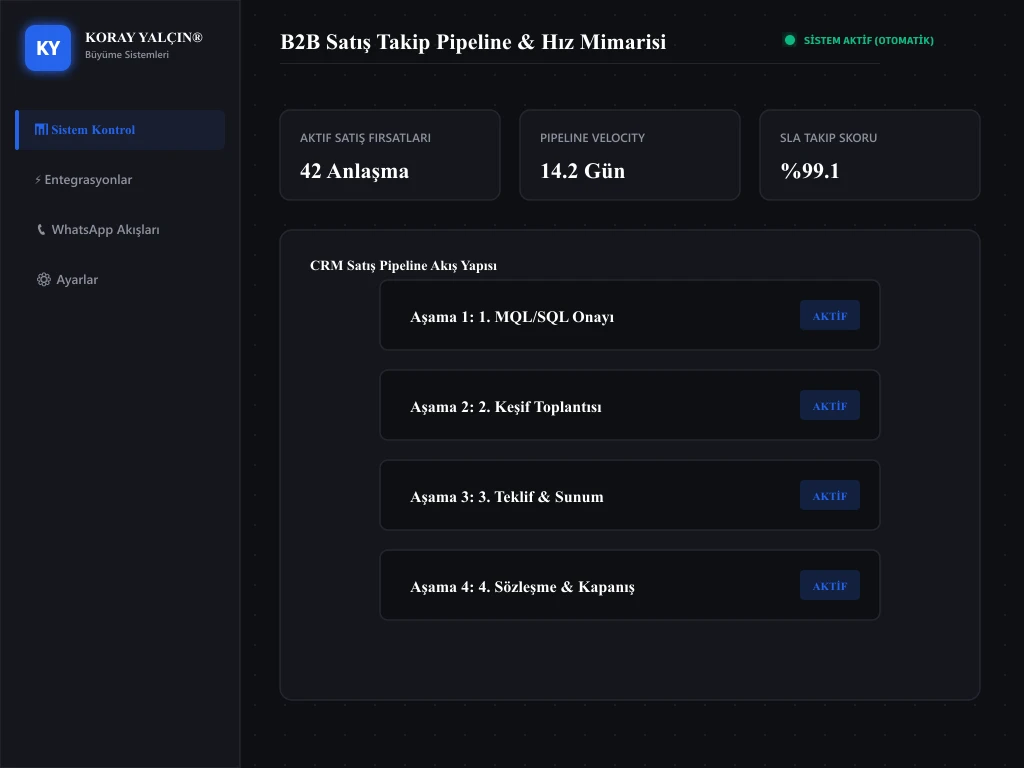
1. Designing B2B Pipeline Stages Correctly
A structure of 5 to 7 stages is ideal for typical B2B sales processes. When comparing CRM systems that fit your company’s sales structure, factor in stage design capabilities and kanban flexibility. Each stage must have a clear definition and exit criteria grounded in tangible documentation:
- Lead Qualification Verified (MQL → SQL): The prospective B2B account has been screened against budget, authority, need, and timing (BANT) criteria.
- Discovery Meeting Held (Discovery Completed): The client’s current technical architecture and pain points have been analyzed.
- Solution & Proposal Presented (Proposal Sent): A customized architecture proposal or pricing has been delivered.
- Technical Decision-Making & Review (Evaluation & Security): IT, Legal, and Security teams have initiated the approval process.
- Closing & Contract (Contracting & Verbal Closure): The contract is in the signing stage.
- Won (Closed Won) / Lost (Closed Lost): The process has concluded.
2. Stage Exit Criteria and Automation
An opportunity’s advancement to the next stage should depend on the customer’s action, not the rep’s intent.
{
  "pipeline_stage": "Proposal Sent",
  "exit_criteria": {
    "proposal_opened": true,
    "proposal_document_link": "VALID_URL",
    "expected_close_date_set": true
  },
  "sla_limit_days": 5,
  "automation_action": "trigger_manager_alert_if_exceeded"
}
3. Bottleneck Detection and Stage Velocity Analysis
The following standard RevOps formula is used to calculate Sales Velocity:
Sales Velocity = (Number of Active Opportunities × Average Deal Value × Win Rate %) / Average Sales Cycle (Days)To identify opportunities stalling within pipeline stages, a maximum dwell time (SLA) must be defined for each stage, and an alert must be sent to the RevOps team whenever that limit is exceeded.
💡 Conclusion and Recommendations
A structured B2B pipeline architecture increases the sales team’s forecast accuracy by 40% while reducing the rate of unfollowed leads to zero.
- To automate your team’s sales processes end to end, you can request System Architecture Consulting.